Holiday
Composition
Occasion
Is a peony rose actually a rose or a peony? It's an understandable question: with dozens of petals, a fully opened bloom can look much more like a lush peony than a classic rose. But the answer is simple: it's a rose. Its resemblance to a peony is purely visual.
Peony roses are roses with lush, densely petalled flowers that open into deep cups or rosettes. They are not a separate botanical species or a single variety, but rather a general term for roses with this distinctive flower shape.
You can browse available peony roses with delivery across Almaty in the Pion.kz catalog. Below, we'll explain how they differ from true peonies and classic roses, what varieties and colors are available, and when they make an especially good choice.
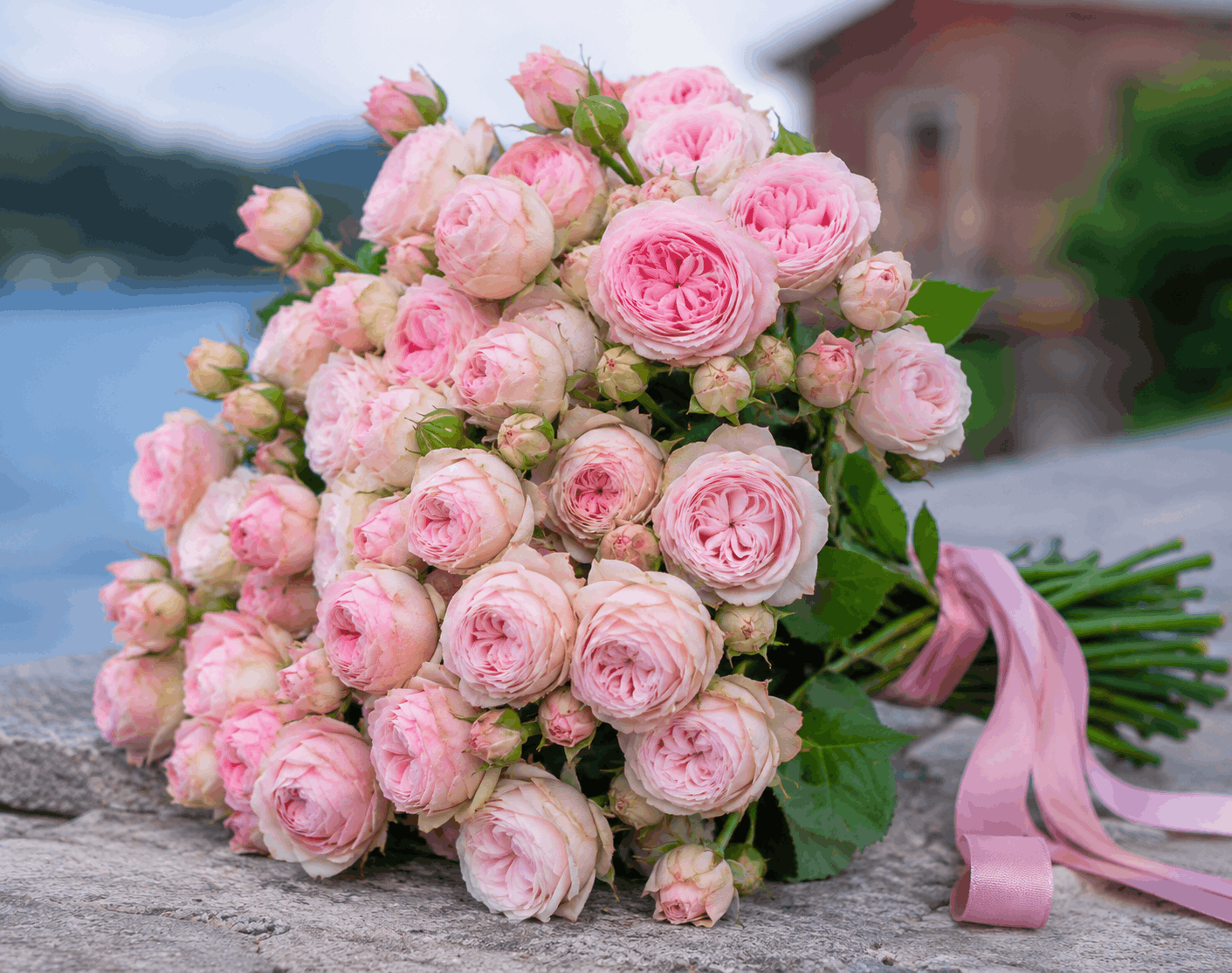
The defining feature of a peony rose is the structure of its flower. Instead of the familiar tall rosebud with clearly defined petals, it has numerous petals arranged into a dense cup or rosette. As the flower opens, it becomes wider and fuller — and this is when the resemblance to a peony is most striking.
Despite the similarity, roses and peonies are not crossbred with each other. They are completely different plants. The peony-like form is the result of rose breeding: breeders selected varieties for densely petalled flowers, distinctive shapes as they open, unusual colors, and, in some cases, pronounced fragrance.
One of the best-known groups is the English garden rose, whose popularity is closely associated with breeder David Austin. Among cut-flower varieties, Juliet is particularly famous for its large, cup-shaped, peach-colored blooms. However, the term peony rose is not limited to David Austin roses: today, many breeders offer varieties with similar flower shapes.
The resemblance can certainly be confusing, especially when the flowers are fully open. But once you look at the flower shape, leaves, and stems rather than just the bloom itself, they are fairly easy to tell apart.
| Peony Rose | Peony | Classic Single-Stem Rose | |
|---|---|---|---|
| What it is | A rose with a lush, densely petalled flower | A separate genus of flowering plants | A rose with one large flower per stem |
| Flower shape | Cup-shaped or rosette-shaped, with many petals | Large and lush; shape varies by variety | Usually a taller, more classic rosebud shape |
| Availability | Available for much of the year | Strongly dependent on season and supply | Widely available almost year-round |
| Fragrance | Depends on the variety | Depends on the variety | Depends on the variety |
| Overall look | Lush, textured, garden-inspired | Lush, natural, seasonal | Classic, clean, and striking |
The most important difference is that they are completely different plants. Roses have characteristic leaves and stems, which may have thorns depending on the variety. Peonies have a different stem and leaf structure, so once you look at the whole plant rather than just the flower head, the difference is usually easy to see.
There is also a practical difference. In Almaty, the widest selection of fresh peonies is usually available during their main season in late spring and early summer. At other times of the year, availability and prices depend on imported supplies. Peony roses are available for a much larger part of the year, although specific varieties and colors still depend on season and current shipments.
It isn't particularly useful to compare the two by fragrance or promise a specific number of days in a vase. Both peonies and peony roses include strongly scented and lightly scented varieties, while vase life depends on the variety, freshness, stage of opening, temperature, and care.
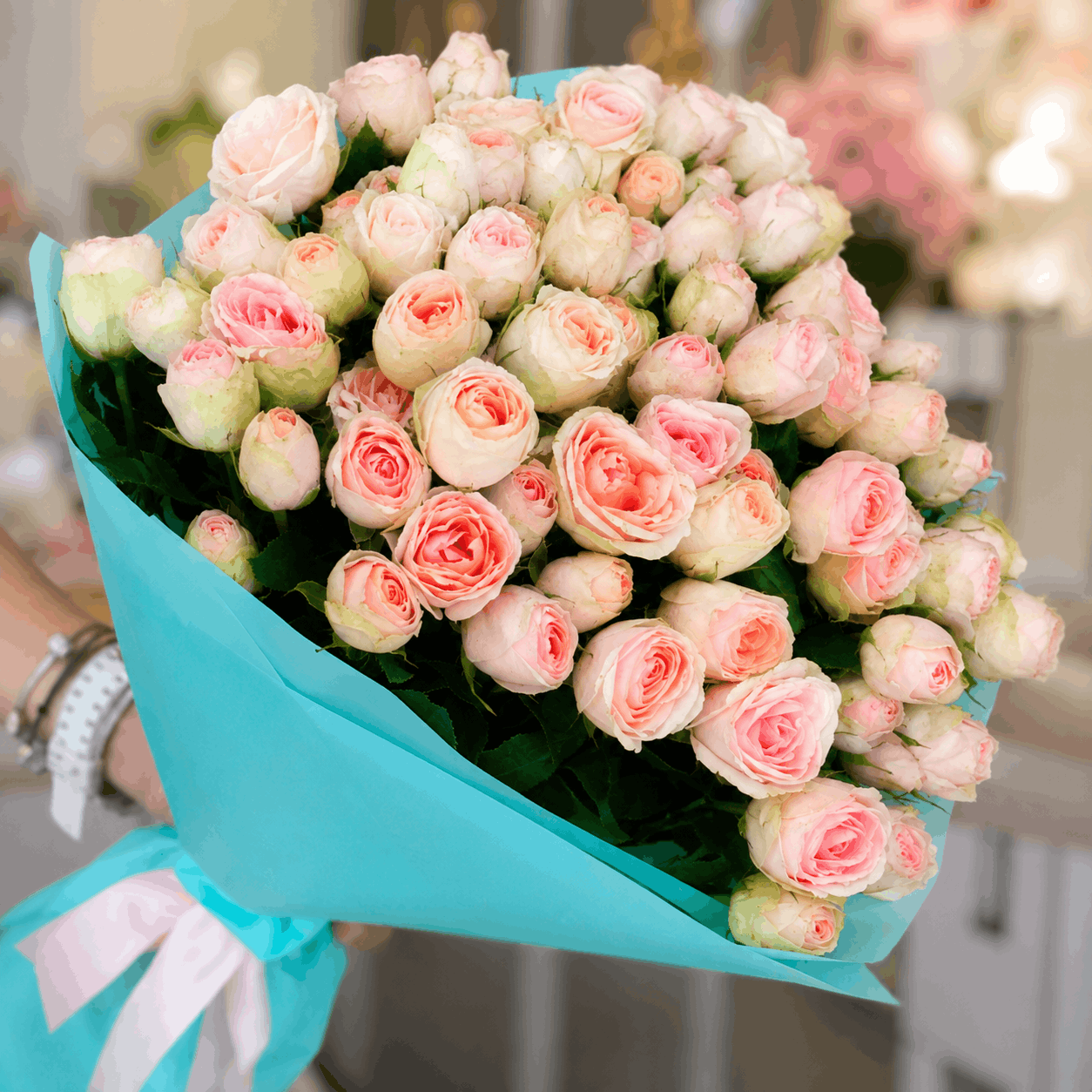
The main difference here is visual. A classic single-stem rose usually has a taller, more structured bud. Even as it opens, it retains the familiar silhouette of a traditional rose. A peony rose opens wider, with numerous petals creating greater depth, texture, and volume.
This is why the same number of peony roses and classic roses can create very different impressions. Fully opened peony varieties produce large, textured blooms, while classic single-stem roses create a cleaner, more structured rhythm in a bouquet.
It's also worth noting that “Dutch rose” is a trade term rather than a botanical category. Flower shops commonly use it for large imported single-stem roses, which is why customers often compare Dutch roses with peony roses. If you prefer a classic bouquet with large, elongated buds, take a look at our Dutch roses.
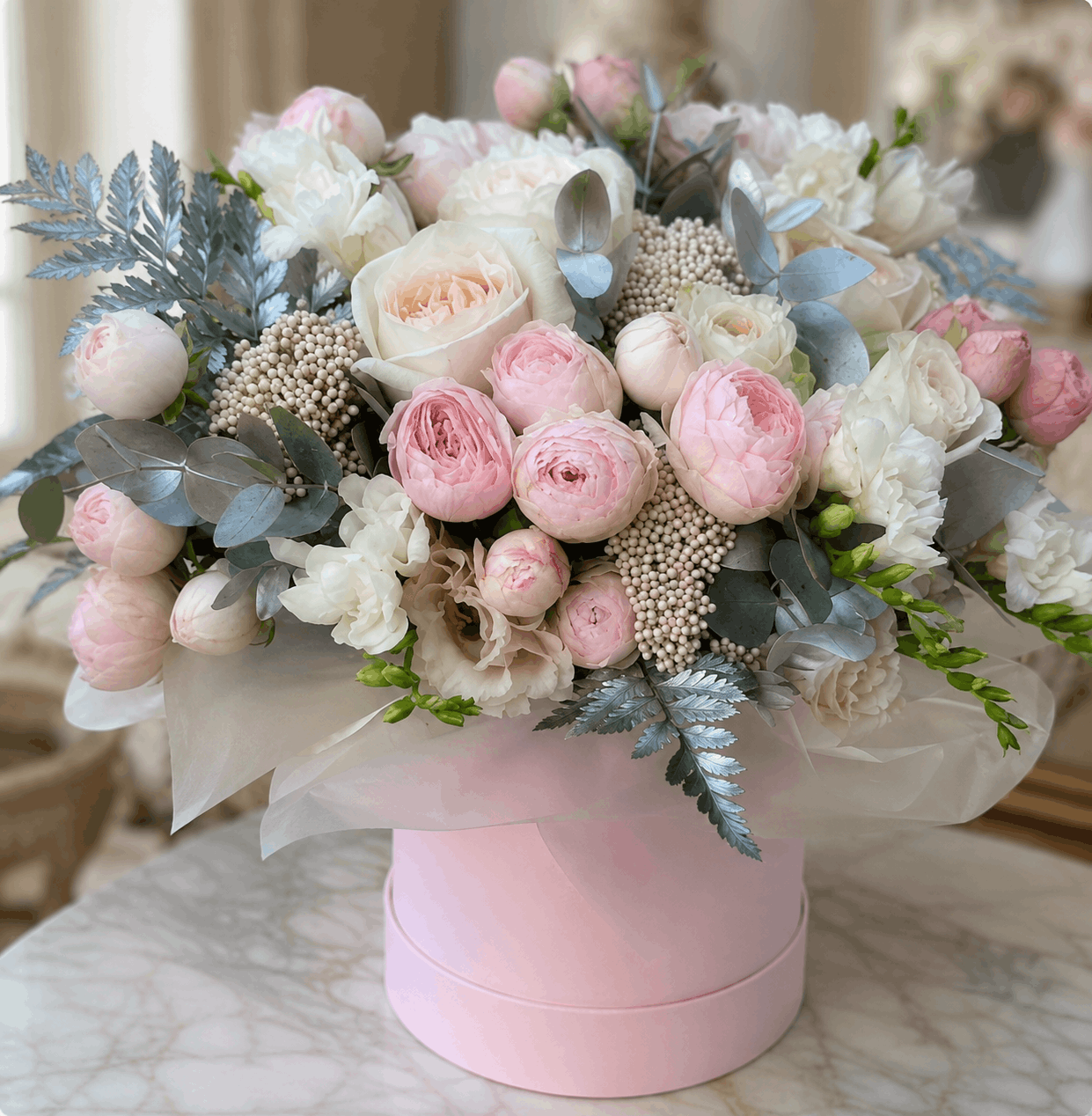
Peony roses differ in much more than color. Depending on the variety, flower size and shape, petal density, opening pattern, and fragrance can all vary. Some retain a deep cup shape, while others gradually open into broad rosettes.
They are available in a wide range of colors:
When choosing, it's worth looking not only at the variety name but also at photographs of the actual bouquet. Peony roses can change dramatically as they open: a compact bud may develop into a broad, densely petalled flower after several days in a vase.
The main reason is their combination of an unusual flower shape with the familiarity of a rose. The flower is instantly recognizable, yet it looks more intricate than a classic rosebud. Once fully open, its layered petal structure becomes especially visible, giving even a mono-bouquet made from a single variety plenty of texture and character.
There is also a practical advantage: peony roses can create a visual effect reminiscent of peonies at times when the selection of true peonies is limited. This is particularly useful for weddings and other events where a specific color palette and bouquet style need to be planned well in advance.
Another reason for their popularity is variety. Peony roses range from delicate pastel shades to rich, vibrant colors, and from compact cup-shaped flowers to large open rosettes. This makes them suitable for bouquets in very different styles.
There are no strict rules. The character of the bouquet depends much more on its color, size, and arrangement than on the flower name itself.
Lush, densely petalled blooms make even a relatively compact bouquet look expressive and festive. If you don't know the recipient's preferences, softer shades such as cream, blush pink, and peach are among the most versatile choices.
Peony roses work beautifully in bridal bouquets and wedding arrangements thanks to their shape and the wide selection of pale shades. They can be used on their own or combined with eustoma, greenery, and spray roses.
They are especially useful when you want the lush, peony-inspired character of an arrangement but the season, required color, or availability of true peonies limits your options.
Peony roses create a softer, more garden-inspired look than a classic mono-bouquet of large red roses. Soft pink, cream, and peach shades work particularly well for a date, an anniversary, or a spontaneous gift with no special occasion.
Peony roses don't have to be pastel. Coral, vivid pink, and deep-colored varieties can create a striking, high-contrast bouquet. Their intricate flower shape makes rich colors look particularly expressive.
Fully opened peony roses photograph beautifully because of their volume and richly textured petals. They are particularly striking in close-up shots. This is one reason they are frequently used in wedding floristry, photo shoots, and gift arrangements where visual presentation matters.
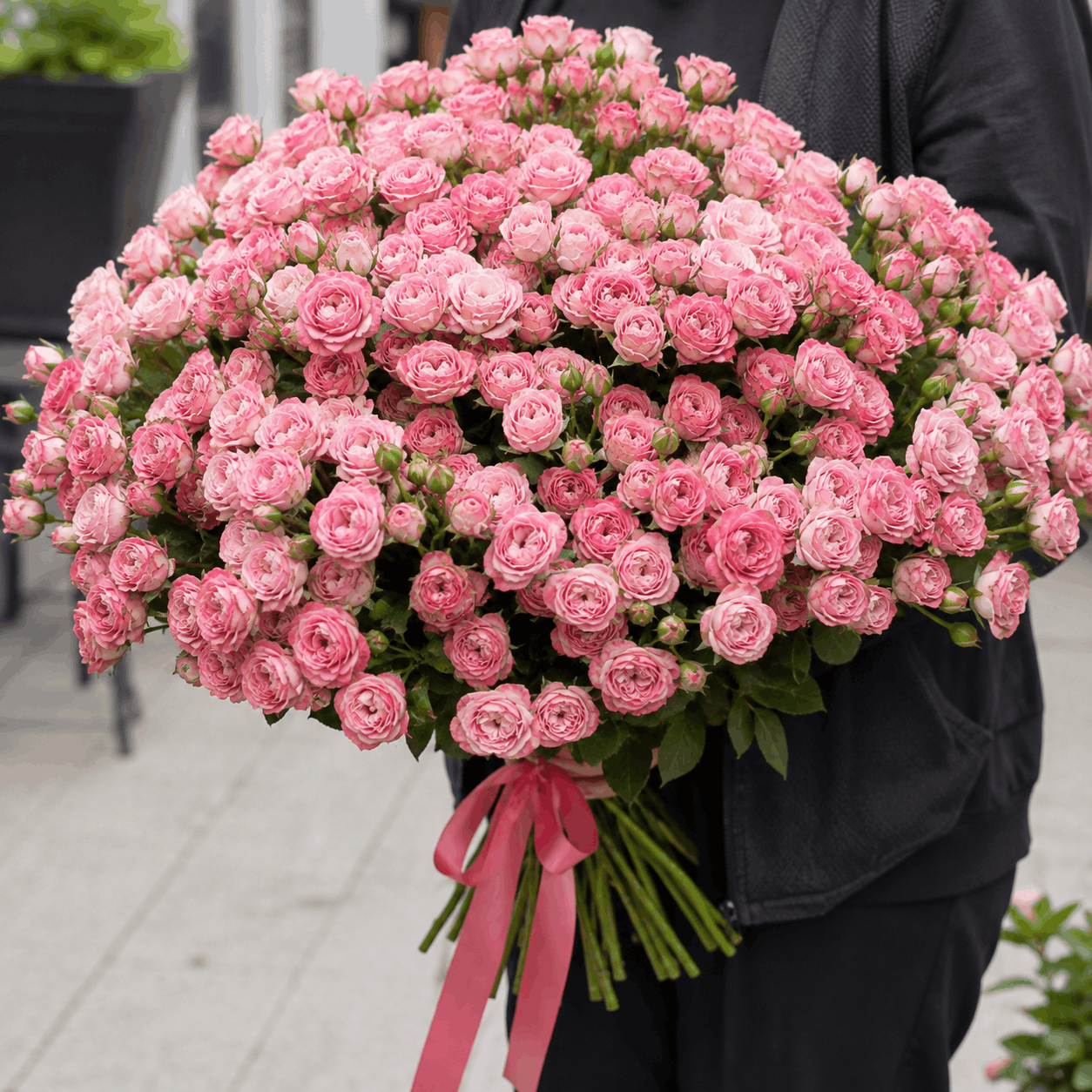
As with spray roses, stem count alone doesn't tell you the whole story. Different varieties can vary considerably in flower size and how fully they open. A few large, fully opened roses may take up as much visual space as a considerably larger number of compact blooms from another variety.
For a small gesture, a compact bouquet may be enough. For a birthday or anniversary, a medium or large arrangement works well. If you want a particularly impressive gift, consider a generous mono-bouquet of one variety or a combination of several complementary shades.
When ordering online, it's more useful to look at photographs and the listed dimensions of the finished arrangement rather than judging the bouquet solely by the number of stems.
Peony roses don't require complicated special care. The basic rules are the same as for other cut roses:
A fully opened peony rose can look very different from the flower you received on the first day: the bloom becomes wider, its inner structure becomes more visible, and the resemblance to a peony grows stronger. This is a natural characteristic of these varieties, not necessarily a sign that the flower is beginning to wilt.
If you prefer a traditional bouquet with large, clearly defined buds, consider classic Dutch roses. If you want something fuller, more textured, and garden-inspired, peony roses are a natural choice. And if you prefer numerous smaller flowers and a lighter, airier arrangement, spray roses may be the better fit.
These are guidelines rather than strict rules. The same type of rose can look completely different depending on the variety, color, stage of opening, and arrangement style. It's often best to decide what kind of impression you want the bouquet to make and then choose the flowers accordingly.
You can browse available varieties and order delivery across Almaty in the Pion.kz peony rose collection. For comparison, explore our Dutch roses, spray roses, or the full rose collection. The complete selection of flowers is available at Pion.kz. Orders are accepted 24/7 through the website or via WhatsApp: +7 707 365 05 05.
Peony roses are loved above all for their distinctive shape: they are true roses, but when fully open, their lush, densely petalled blooms can closely resemble peonies. With a wide range of varieties, colors, and flower shapes — from neat, deep cups to broad rosettes — peony roses work equally well in wedding floristry, romantic arrangements, and large celebration bouquets.